Show Nobody: The Case for Keeping Your Work to Yourself a Little Longer

There's a moment in almost every creative project where the idea is alive but barely. It exists somewhere between a real thing and a feeling you haven't fully named yet. It's fragile in the best possible way — unfinished, unpolished, and full of potential that hasn't been boxed in by anyone else's opinion.
And then you show it to someone.
Maybe it's a friend. Maybe it's a collaborator, a client, or a group chat full of people you respect. You're not even sure why you're sharing it — the work isn't done — but you do it anyway. And the second the first note comes in, something shifts. The idea that was yours starts bending toward someone else's version of what it should be.
This is the feedback trap. And a lot of creative people fall into it constantly without realizing it's happening.
Why We Ask Too Soon
Seeking input early rarely comes from a place of genuine collaboration. More often, it comes from anxiety. When a concept is new and unproven, sitting alone with it can feel unbearable. You don't know yet if it's good. You don't know if it's worth pursuing. So you outsource that uncertainty to someone else, hoping their reaction will tell you how to feel about your own work.
The problem is that feedback at this stage isn't actually feedback — it's interference. The idea hasn't had time to develop its own internal logic. It doesn't have a spine yet. So when someone pokes at it, even gently, even helpfully, it collapses in ways it wouldn't have if you'd given it more time to solidify on its own.
Creative professionals do this more than they'd like to admit. A designer shares a half-baked concept in a Slack thread. A brand strategist pitches a direction before they've fully convinced themselves. An illustrator posts a rough sketch asking "what do you think?" before they've even figured out what they think. The responses come in — some encouraging, some critical, all well-meaning — and suddenly the work stops being theirs.
The Design-by-Committee Problem Nobody Talks About
When you ask for input before a concept is ready, you're not just getting feedback. You're opening the floor to a committee that nobody officially invited. And committees, by their nature, sand down edges. They push toward the familiar, the safe, the version that doesn't make anyone uncomfortable.
This isn't a knock on the people giving feedback. It's just what happens when a group of different perspectives encounters something that isn't fully formed. Each person fills in the blanks with their own assumptions, their own taste, their own sense of what the work should become. And if you're not yet clear on your own vision, those outside voices will shape the work more than your instincts ever got the chance to.
The result is creative output that technically incorporates everyone's input and genuinely belongs to no one. It's competent, often. Sometimes it's even good. But it's rarely the thing you were actually reaching for.
What "Ready for Feedback" Actually Means
Here's a more useful framework: your work is ready for outside eyes when you have a point of view about it.
Not when it's perfect. Not when every detail is resolved. But when you can look at it and say, clearly, what you were going for — even if you haven't fully gotten there yet. When you can defend a choice, explain a direction, or articulate why something feels right even if you can't prove it yet.
At that point, feedback becomes genuinely useful because you have a stable enough foundation to evaluate it. You can hear a note and decide whether it's pushing you closer to your vision or pulling you away from it. You're in conversation with the input, rather than being reshaped by it.
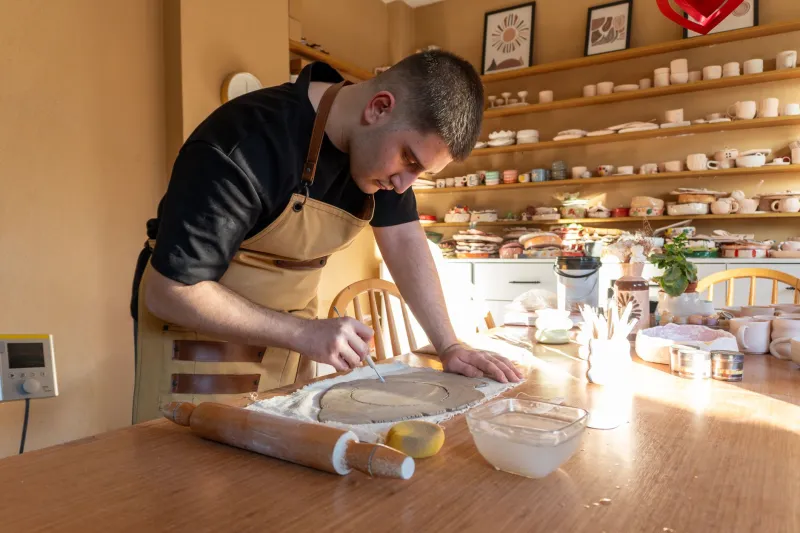
Before that? You're just handing someone a lump of clay and asking them to tell you what it should become.
The Practice of Sitting Longer
This is harder than it sounds, especially in a creative culture that moves fast and rewards constant output. There's pressure — real pressure — to share, post, iterate, ship. Sitting with something feels like stalling. Keeping work private feels like hiding.
But some of the most distinctive creative work comes from people who are ruthlessly protective of their process in the early stages. They let ideas breathe. They follow threads without asking anyone else if the thread is worth following. They make decisions based on instinct before they go looking for external validation.
Practically, this might look like setting a personal rule: no sharing until you've made at least three significant decisions about the work on your own. Or giving yourself a time buffer — 48 hours of private development before anything goes into a group chat or a client check-in. Or simply asking yourself, before you hit send, whether you're sharing because the work is ready or because you're uncomfortable sitting with uncertainty.
That last question is the most honest one. And the answer, more often than not, tells you exactly what to do.
Protecting the Thing That Makes It Yours
Every creative professional has a voice — a specific way of seeing and solving that belongs only to them. That voice is the whole point. It's what makes a portfolio feel cohesive, what makes clients seek you out, what makes your work recognizable in a crowded field.
But that voice is also the first thing to disappear when you seek feedback too early. Because it hasn't had time to assert itself. It's still finding its footing. And outside input, however well-intentioned, will always push toward the familiar — toward what that person already knows and already understands.
The act of protecting your early-stage work isn't about ego. It's not about refusing collaboration or pretending you don't need other people. It's about giving your instincts enough runway to actually land before you let anyone else weigh in on the flight path.
Some of the best ideas you'll ever have are sitting in a folder somewhere, half-finished and waiting. They didn't go anywhere because you showed them to someone before they were strong enough to survive the contact.
Next time, wait a little longer. The work will thank you.