Growing Pains: Why the Brand That Built You Might Be the One Holding You Back
There's a version of success that feels like freedom but functions more like a cage. You built something real — a recognizable style, a consistent voice, a personal brand that people actually respond to. Clients know what they're getting when they hire you. Your audience knows what to expect when they open your feed. Everything is working.
And then one day, you want to try something different. Maybe the work that used to excite you feels a little stale. Maybe you've been quietly experimenting in a sketchbook no one ever sees. Maybe you just feel a pull toward something you can't quite name yet.
That's the moment the trap springs.
Because somewhere along the way, "staying true to yourself" got tangled up with "staying exactly the same." And those two things are not the same thing at all.
The Authenticity Myth No One Talks About
Authenticity is one of the most overused words in creative culture right now, and also one of the most misunderstood. The way most people use it, authenticity sounds like a fixed point — something you locate once and then protect forever. But that's not how people actually work.
Think about any creative you genuinely admire. Chances are, they've shifted. Significantly. The early work looks different from the middle work, which looks different from what they're making now. And that evolution isn't a betrayal of who they are — it is who they are. The willingness to grow is the most authentic thing about them.
When we lock ourselves into an early version of our creative identity and call it "staying true," we're not being authentic. We're being static. There's a difference.
How the Identity That Got You Here Can Stop You From Getting There
Personal branding works by making you legible. You signal a specific set of values, aesthetics, or skills, and the right people start to recognize you for them. That recognition is genuinely valuable — it's how you build a client base, grow an audience, and establish credibility in a crowded market.
The problem shows up when legibility becomes a contract you never actually signed.
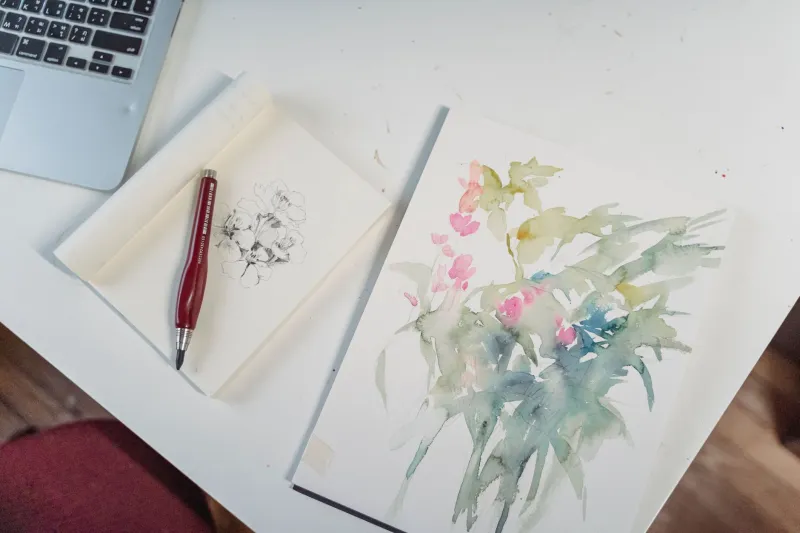
Say you built your reputation around clean, minimal illustration work. Clients hired you for that specific look. Your audience followed you for it. Now you want to explore something looser, more expressive, maybe even a little chaotic. The work excites you in a way the polished stuff hasn't in a while.
But every time you share it, the engagement tanks. A few longtime followers unfollow. A client says, "We love your usual style — can you stick to that?" And slowly, without anyone meaning to pressure you, you start retreating back to the version of yourself that everyone already approved of.
That's not creative integrity. That's audience management. And over time, it will hollow out the work.
The Difference Between Evolving and Abandoning
Here's where it gets nuanced, because not every shift is growth. Sometimes what feels like creative evolution is actually avoidance — running from the discomfort of mastering something difficult by starting something new. That's worth being honest with yourself about.
But there's a real difference between chasing novelty and genuinely outgrowing a phase. The first is restless. The second feels more like necessity — like you've actually learned what that chapter had to teach you, and continuing to repeat it would be the more dishonest choice.
The question worth sitting with isn't "Am I being consistent?" It's "Am I still learning something here?"
If the answer is no, staying put isn't loyalty to your brand. It's just inertia dressed up as integrity.
What Transition Actually Looks Like in Practice
Evolution doesn't have to be a dramatic public announcement. In fact, the quieter version is usually more sustainable. A few practical ways creatives navigate this:
Let the work lead. Before you update your bio or redesign your portfolio site, just make the new work. Give it time to develop. You don't owe anyone a rebrand until you actually know where you're headed.
Bridge rather than break. The most seamless transitions carry some thread from the old work into the new. It doesn't have to be obvious — even a shared sensibility or a recurring visual instinct can help your audience follow you without feeling whiplashed.
Separate your platform from your laboratory. Keep a space — a private account, a sketchbook, a folder on your desktop — where you experiment without performance pressure. Not everything in development needs an audience.
Reframe what loyalty to your audience actually means. The people who genuinely connect with your work aren't just following a look. They're following a sensibility, a point of view, a way of seeing. That can evolve and still be recognizably you.
The Ceiling Is Built From Old Compliments
One of the sneakier parts of this whole dynamic is that the pressure to stay the same often comes wrapped in praise. "I love your style." "Don't change a thing." "This is exactly what your work is all about." It feels like encouragement, and it is — but it's encouragement to stay where you are.
Compliments are, by definition, about the past. They describe what you've already made. Using them as a blueprint for everything you make next is a little like driving by looking in the rearview mirror. You can see exactly where you've been. You just can't see where you're going.
The most interesting creative careers are the ones where the person kept asking more of themselves than their audience was asking of them. That gap — between what people expect and what you're actually capable of — is where the real work lives.
Permission to Shift
If you've been feeling the pull to try something different, to let your work move in a direction that doesn't quite fit the box you've been operating in — that feeling is worth taking seriously. Not every instinct is right, but the impulse to grow almost always is.
Your earliest brand was never the destination. It was the starting point. The identity that got people to notice you in the first place was built from curiosity, experimentation, and the willingness to put something real into the world before you knew how it would land.
That same energy is what gets you to the next place. The only thing standing in the way is the version of yourself that already got comfortable.
Let it be a little uncomfortable again. That's usually the sign that something worth making is just around the corner.