Nobody's Coming to Say Go: Breaking Free from the Approval Loop That's Stalling Your Creative Career
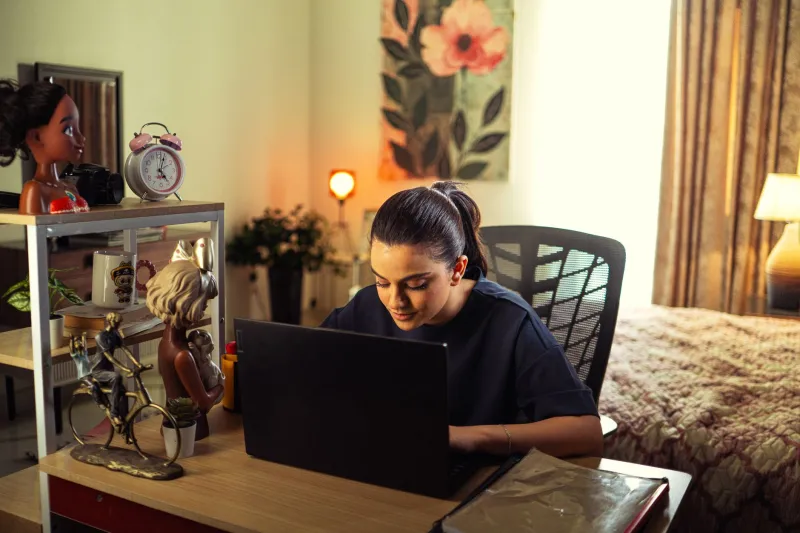
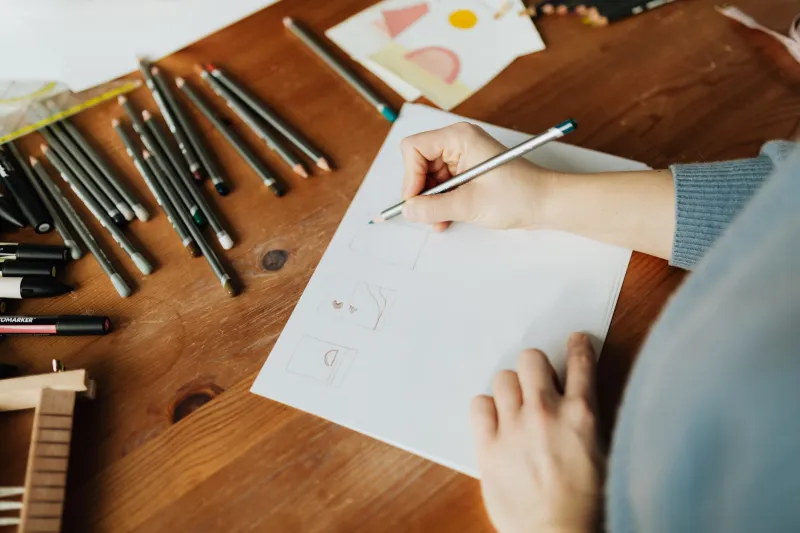
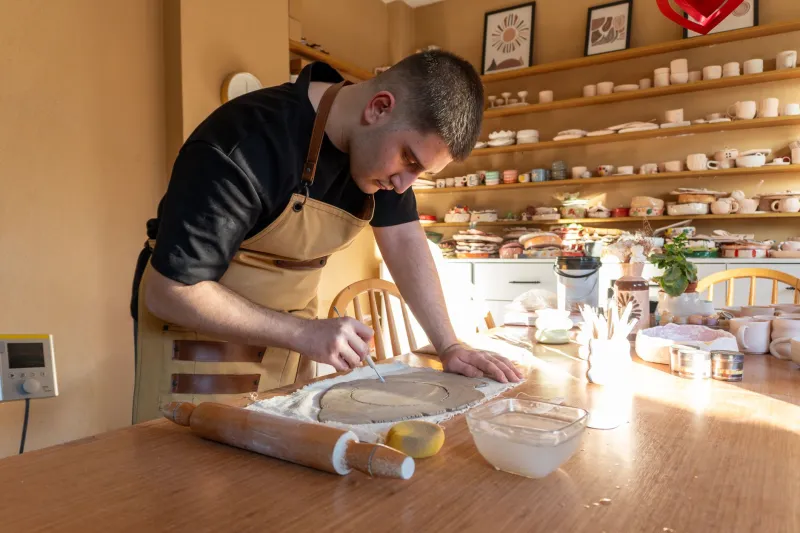
Somewhere right now, a designer has a portfolio concept they've been "almost ready" to launch for eight months. A photographer has a personal project she's been refining in private, waiting until it feels polished enough to share. A brand strategist has a service offering sketched out in a notebook that never quite makes it to his website.
They're all talented. They're all capable. And they're all, in some form, waiting.
Waiting for what, exactly? That's the uncomfortable question. Because when you press most creatives on it, the answer isn't a concrete milestone — it's a feeling. A sense that someone, somewhere, needs to give them the nod before it's real. Before it counts. Before they're allowed to begin.
That feeling has a name: the permission problem. And if you've built a career in any creative field, there's a decent chance it's been quietly running interference on your growth for longer than you'd like to admit.
Where the Habit Comes From
It makes sense that creative professionals are wired this way. Think about the systems most of us were raised inside. School trained us to raise our hand before we spoke. Jobs trained us to pitch ideas upward and wait for budget approval. The design industry — with its layers of client feedback, revision rounds, and stakeholder sign-offs — practically institutionalized the idea that nothing moves forward until someone in authority says so.
Add to that the very human fear of public failure, and you've got a perfect recipe for stalling. Seeking external validation before you act isn't laziness. It's a deeply conditioned response to environments that punished premature action. The problem is that those environments had structures — grades, bosses, clients — that made the feedback loop functional. When you're working on your own vision, your own brand, your own creative future? That structure evaporates. And a lot of people are left standing at the starting line, still looking around for a referee who isn't coming.
What the Wait Actually Costs You
Here's the part people don't talk about enough: waiting for permission isn't neutral. It feels passive, but it has real, compounding costs.
The most obvious one is time. Every month a project sits in draft mode is a month it isn't building your reputation, attracting clients, or teaching you something new. But the subtler cost is momentum. Creative confidence isn't a fixed resource — it's something you build by doing. Every time you delay action in favor of more preparation, more refinement, more validation-seeking, you're actually eroding the very confidence you think you're trying to earn.
There's also an opportunity cost that's harder to quantify. The creative professional who launches an imperfect portfolio site in March and iterates on it over the following year will almost always outpace the one who waits until December to release something "finished." The market rewards presence and consistency far more than it rewards perfection.
And then there's the identity cost. When you spend enough time waiting to be validated, you start to internalize the idea that your instincts alone aren't trustworthy. That's a damaging belief to carry into any creative career.
Stalling vs. Genuine Preparation: How to Tell the Difference
To be fair, not every pause is a permission problem. Sometimes you really do need more time. The trick is learning to distinguish between legitimate preparation and anxiety-driven delay.
Ask yourself a few honest questions:
- Is there a concrete skill or resource I'm missing, or am I just uncomfortable? Real preparation has a specific endpoint. "I need to learn X before I can do Y" is different from "I just don't feel ready yet."
- Have I been in this preparation phase for more than 90 days? Some projects genuinely take time. But if you've been "getting ready" for the better part of a year with no clear finish line, that's a signal worth paying attention to.
- What's the actual worst-case scenario if I launch now? Most creatives dramatically overestimate the consequences of an imperfect launch. The realistic downside is usually pretty manageable.
- Am I waiting for conditions to be perfect, or for someone to tell me they are? These are different problems, but both tend to produce the same inaction.
The People Who Just Started Anyway
Some of the most recognizable names in design and creative entrepreneurship have one thing in common: they started before they felt ready, and certainly before anyone handed them permission.
Paula Scher — one of the most celebrated graphic designers in American history — talks openly about making bold decisions quickly and trusting her instincts in the room. She didn't wait for consensus. Aaron Draplin built a devoted following around DIY design culture, launching Field Notes and his own studio on the strength of his own conviction long before the industry caught up to what he was doing. Jessica Walsh co-founded her own studio in her twenties, a move that would have been easy to second-guess endlessly if she'd waited for some external signal that the timing was right.
These aren't people who had more certainty than everyone else. They just stopped treating certainty as a prerequisite for action.
How to Start Breaking the Loop
If you recognize yourself in any of this, the good news is that the permission problem is genuinely solvable. Not quickly, and not without some discomfort — but solvable.
Set a ship date and treat it like a client deadline. External deadlines work on our brains in ways internal ones don't. Tell someone your launch date. Put it in your calendar. Create accountability that doesn't depend on your own motivation to feel ready.
Reframe what "done" means. A portfolio site doesn't need to be your life's work — it needs to be functional and honest. A project doesn't need to be perfect — it needs to exist. Lower the bar for initial release and raise the bar for iteration.
Get comfortable with the minimum viable version. Launch the thing in a form that works, then improve it in public. This is how most successful creative businesses actually operate, even if it doesn't look that way from the outside.
Notice when you're seeking feedback versus seeking permission. Feedback is useful. Asking a trusted colleague to review your work before you share it widely is smart. But if you're asking people whether you should do the thing at all — whether your idea is good enough, whether the timing is right, whether you're qualified — that's permission-seeking, and it's unlikely to give you what you actually need.
The Only Green Light That Matters
Here's the honest truth: in creative work, the green light is almost always self-issued. The designers, artists, and entrepreneurs who build careers they're proud of don't wait until the industry validates them — they put work into the world and let the response inform what comes next.
That doesn't mean ignoring feedback or skipping the learning curve. It means understanding that the act of starting is itself a form of qualification. You don't become ready and then begin. You begin, and readiness follows.
So whatever's sitting in your drafts folder, your sketchbook, your half-built portfolio — it doesn't need someone else's approval to become real. It just needs you to decide it does.