The One-Person Studio: How to Build Real Creative Confidence When Nobody's Watching
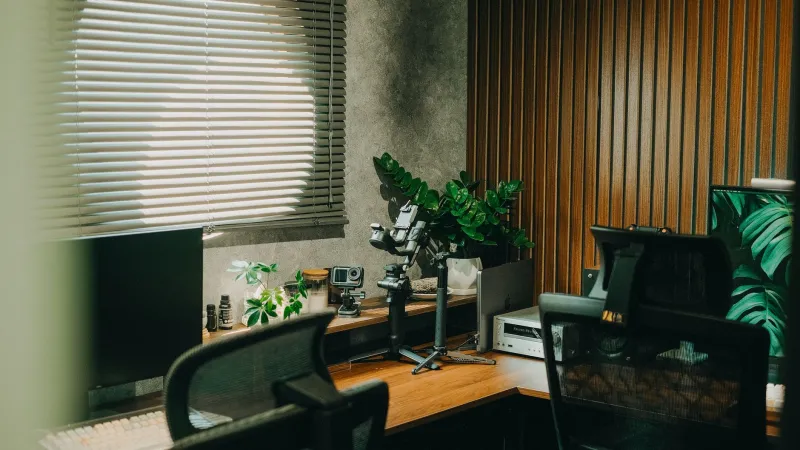
Some days, working alone feels like freedom. No meetings, no consensus-building, no creative direction by committee. Just you, your tools, and the work. Other days, the silence is genuinely unsettling. You finish something and there's no one to say whether it's brilliant or just okay. You make a call on a direction and wonder, for the rest of the afternoon, if you should have gone the other way.
That uncertainty isn't weakness. It's what happens when the usual scaffolding—colleagues, creative directors, studio culture—isn't there. The question is what you build in its place.
The Validation Problem
Here's what nobody really talks about when they celebrate the solo creative life: a lot of what passes for confidence in collaborative environments is actually borrowed confidence. It's the creative director nodding at your concept. It's the team rallying around a direction. It's external momentum passing itself off as internal certainty.
When that's gone, you realize pretty fast how much weight it was carrying.
The solo studio paradox is this: independence is supposed to be liberating, but without any external input, it can quietly become paralyzing. You start second-guessing decisions that would have felt easy in a room full of people. You seek validation in places that weren't designed to give it—social media likes, client approval, page views—and mistake that feedback for a reliable compass.
It isn't. And building a practice around it will eventually hollow out your instincts.
What Genuine Creative Confidence Actually Looks Like
Real confidence, the kind that doesn't collapse when the room goes quiet, is built on something more internal than external. It's not about certainty—it's about having a process you trust enough to follow even when the outcome isn't guaranteed.
That sounds abstract, so let's make it concrete.
A creative who has genuine confidence can articulate why they made a choice. Not just that it felt right, but what problem it solved, what it was in conversation with, what they were trying to achieve. That kind of reasoning doesn't require an audience. It exists whether or not anyone else ever sees the work.
Building that capacity is a practice, not a personality trait. It takes deliberate effort, especially when you're used to working in environments that externalize the decision-making process.
Setting Internal Benchmarks
One of the most useful things a solo creative can do is establish their own criteria for good work before they start a project—not after. What does success look like here, independent of how it's received? What would make this piece feel complete to you, separate from client approval or public engagement?
Write it down. Literally. It sounds elementary, but having a written record of your intentions gives you something to measure against when you're deep in the work and your judgment starts to blur. It also creates a feedback loop that doesn't rely on anyone else.
Over time, those benchmarks become a kind of internal critical voice—not a harsh one, but a useful one. The kind that keeps you honest without shutting you down.
Building a Self-Critique System That Works
Self-critique is one of the most underrated skills in creative work, and also one of the most misunderstood. A lot of creatives either skip it entirely—shipping work before they've really looked at it—or they turn it into self-punishment, tearing apart everything they make until they're too demoralized to finish.
Neither is useful.
A functional self-critique system is structured and time-limited. Step away from the work. Come back with fresh eyes, ideally the next day. Evaluate it against the criteria you set before you started. Note specifically what's working, what isn't, and—importantly—why. Then decide what, if anything, needs to change.
The why is the part most people skip. It's also the part that builds your instincts over time. If you can consistently articulate why something isn't landing, you start to recognize those patterns earlier in the process, before they cost you time and confidence.
Creating Low-Stakes Feedback Without the Echo Chamber
Working alone doesn't have to mean working in a vacuum. The key is seeking input that challenges your thinking without replacing it.
A small, trusted circle of peers—other creatives who aren't competing with you and aren't trying to please you—can be genuinely useful here. The difference between a peer circle and an echo chamber is honesty. If everyone you show your work to tells you it's great, that's not feedback. That's comfort.
Find people who will tell you what's not working. Not harshly, but directly. And when they do, resist the urge to either defend the work or immediately agree with them. Sit with the critique. See if it resonates when you apply your own internal benchmarks. Use it as data, not as verdict.
Trusting the Silence
At some point, you have to make peace with the fact that working alone means making decisions that nobody will validate in real-time. That's not a flaw in the solo studio model. It's a feature—if you let it be.
Every decision you make without external approval is a small act of trusting yourself. Over time, those small acts accumulate into something real. Not arrogance, not false certainty, but a genuine working relationship with your own creative judgment.
The silence isn't empty. It's just yours.