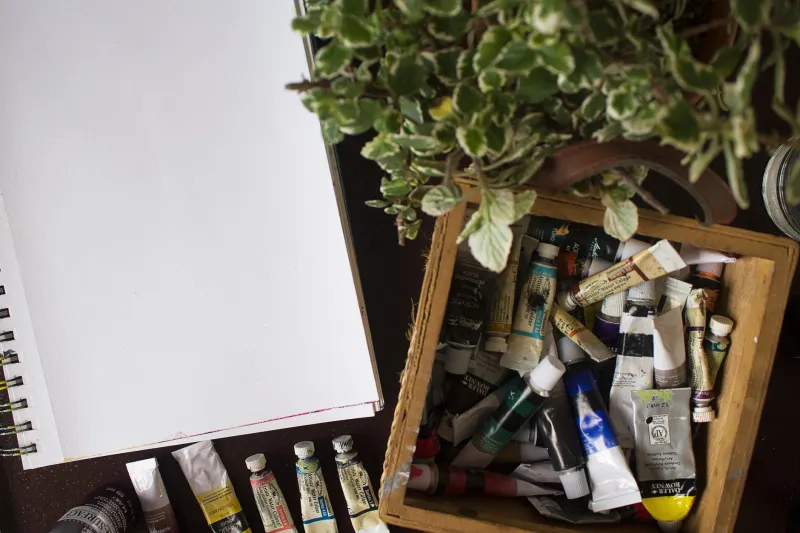
Go Quiet on Purpose: The Case for Planned Creative Downtime
We tend to treat rest as something that happens to us, not something we choose. We work until we can't, crash for a weekend, and then drag ourselves back to the desk hoping the well has refilled. It usually hasn't. So we push through, and the cycle continues.
But there's a different way to think about creative downtime — one that isn't about recovering from exhaustion but about proactively protecting the conditions that make good work possible in the first place.
Call it a creative sabbatical. Not a vacation (though that's valuable too). Not a mental health break triggered by crisis. A deliberate, scheduled, intentional period of stepping back from client work, social media, industry news, and the general noise of professional creative life.
It sounds counterproductive. In practice, it might be the most useful investment you make all year.
The Difference Between Empty and Open
Burnout creates emptiness. A sabbatical creates openness — and those are very different states.
When you're burned out, your brain is depleted. Rest helps, but it's largely about getting back to baseline. When you step back intentionally, before the depletion hits, you're not trying to recover. You're creating space. Space for ideas that don't have a brief attached. Space for curiosity that isn't pointed at a deadline. Space to notice what you actually find interesting when nobody's asking you to produce anything.
That distinction matters because the output of each state is different. Recovering from burnout gets you back to functional. A planned sabbatical can take you somewhere new.
What Stepping Back Actually Looks Like
A creative sabbatical doesn't have to mean six months off the grid. For most working designers, artists, and creative professionals — especially freelancers with real financial obligations — that's not realistic. But the structure matters less than the intention.
A sabbatical could be two weeks with no client work and no social media. It could be a month where you only work on personal projects and deliberately avoid reading industry publications. It could be a long weekend every quarter where you do something completely unrelated to your practice.
The key elements are:
It's planned, not reactive. You decide to do it before you need to, not because you've hit a wall.
It has clear boundaries. You know what you're stepping back from and for how long. Vague intentions to "take it easy" don't count.
It's not just passive. The best sabbaticals aren't spent scrolling Netflix and doing nothing. They're spent doing things that feed you — travel, reading outside your field, making things with your hands, spending time in places that don't look like your usual environment.
It ends. You return with a plan. The sabbatical isn't an escape; it's a reset with a defined endpoint.
What the Silence Actually Does
Here's what tends to happen when creative professionals genuinely step back for a defined period:
First, there's discomfort. The urge to check in, to stay visible, to keep producing is strong. Most of us have internalized the idea that visibility equals relevance, and silence feels like falling behind. That discomfort is worth sitting with, because it usually reveals how much of your creative energy is going toward performing productivity rather than actually making things.
Then, usually around the halfway point, something shifts. The mental chatter quiets. You stop thinking about what you should be working on and start noticing what you're actually drawn to. Ideas surface that aren't in response to any prompt. Connections form between things that seemed unrelated.
This is the state that a lot of creatives describe as their most generative — and it's almost impossible to access when you're in the middle of a full schedule with notifications going off and a client waiting on revisions.
The Professional Case (Because You Need One)
If you're self-employed or running your own studio, the idea of planned downtime can feel irresponsible. There's always more work to do, always another opportunity to chase. Taking yourself offline feels like leaving money on the table.
But consider the long math. Creative professionals who never step back tend to plateau. Their work becomes competent but safe. Their range narrows. They start repeating themselves without realizing it, because they've never given themselves the distance to notice.
The designers and artists with the most interesting, durable careers are almost always the ones who've built some version of this practice into their rhythm. Not because they can afford to, but because they've decided it's non-negotiable — like sleep, or exercise, or any other thing that keeps you functional over the long term.
You can frame it however you need to for clients or collaborators. A focused development period. A studio reset. A research phase. The label matters less than the reality: you are deliberately creating the conditions for better work.
Coming Back
The return from a sabbatical is its own skill. The temptation is to immediately fill the space you created with new commitments, to prove you haven't been idle, to get back to the pace you left.
Resist that. The fresh perspective you return with is fragile. Give it room to breathe before the calendar fills back up. Write down what surfaced during the break — the ideas, the directions, the questions you found yourself asking. That material is your return investment. Use it.
Planned silence isn't about doing less. It's about doing better. And sometimes the most productive thing you can put on your schedule is a stretch of time where you're not producing anything at all.